A general Note
NIH-funded research contributed to 354 of 356 drugs approved by the US Food and Drug Administration in
2010–19. Cleary, E. G. et al. JAMA Health Forum 4, e230511 (2023). From a recent Nature article on the NIH
How the NIH dominates the world’s health research — in charts
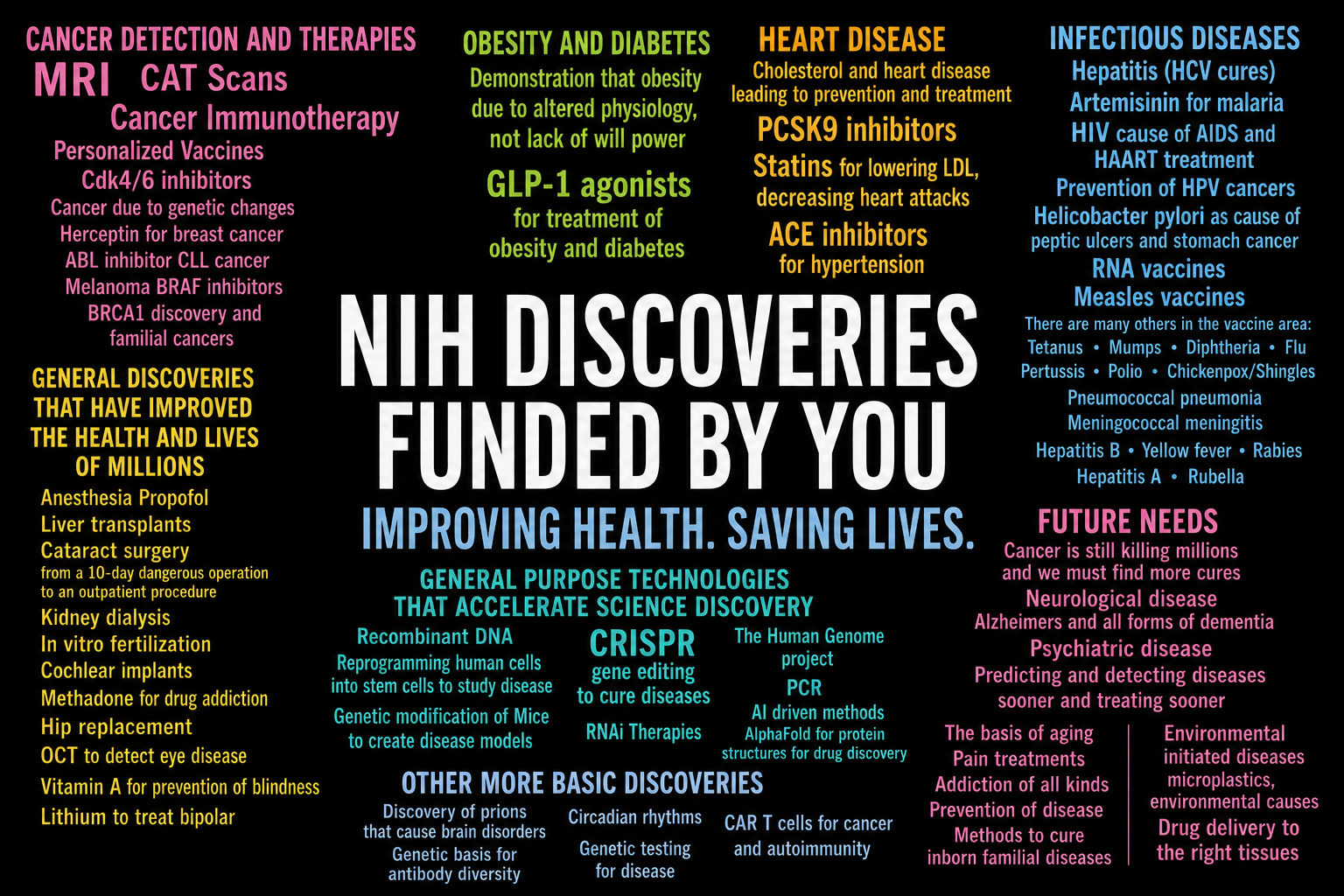
Abrupt funding cuts to the US National Institutes of Health threaten global progress in medical research. Here are some of the discoveries that funding has provided us already:
Categories
Cancer detection and therapies
- MRI
- CAT Scans
- Cancer Immunotherapy
- Personalized Vaccines
- Cdk4/6 inhibitors
- Cancer due to genetic changes
- Herceptin for breast cancer
- ABL inhibitor CLL cancer
- Melanoma BRAF inhibitors
- BRCA1 discovery and familial cancers
Obesity and Diabetes
- Demonstration that obesity due to altered physiology, not lack of will power
- GLP-1 agonists for treatment of obesity and diabetes
Heart disease
- Cholesterol and heart disease leading to prevention and treatment
- PCSK1 inhibitors
- Statins for lowering LDL, decreasing heart attacks
- ACE inhibitors for hypertension
Infectious diseases
- Hepatitis (HCV cures)
- Atremisinin for malaria
- HIV cause of AIDS and HAART treatment
- Prevention of HPV cancers
- Heliobacter pylori as cause of peptic ulcers and stomach cancer
- RNA vaccines
- Measles vaccines
- There are many others in the vaccine area, tetanus, Mumps, Diptheria, Flu, Pertussis, Polio, Chicken
pox/shingles, Pneumococcal pneumonia, Meningococcal meningitis, Hepatitus B, yellow fever, Rabies,
Hepatitus A, Rubella
General discoveries that have improved the health and lives of millions
- Anesthia Propofol
- Liver transplants
- Cataract surgery from a 10-day dangerous operation to an outpatient procedure
- Kidney dialysis
- In vitro fertilization
- Cochlear implants
- Methadone for drug addiction
- Hip replacement
- OCT to detect eye disease
- Vitamin A for prevention of blindness
- Lithium to treat bipolar
General purpose technologies that accelerate science discovery
- Recombinant DNA
- Reprogramming human cells into stem cells to study disease
- Genetic modification of mice to create cancer models
- CRISPR gene editing to cure diseases
- RNAi Therapies
- The Human Genome project
- PCR
- AI driven methods AlphaFold for protein structures for drug discovery
Other more basic discoveries
- Discovery of prions that cause brain disorders
- Genetic basis for antibody diversity
- Circadian rhythms
- Genetic testing for disease
- CAR T cells for cancer and autoimmunity
Future needs
- Cancer is still killing millions and we must find more cures
- Neurological disease Alzheimers and all forms of dementia
- Psychiatric disease
- Predicting and detecting diseases sooner and treating sooner.
- The basis of aging
- Pain treatments
- Addiction of all kinds
- Prevention of disease
- Environmental initiated diseases microplastics, environmental causes
- Methods to cure inborn familial diseases
- Drug delivery to the right tissues
Merad points to a study1 that shows that NIH-funded research contributed to 354 of 356 drugs approved by the US Food and Drug Administration in 2010–19. Cleary, E. G. et al. JAMA Health Forum 4, e230511 (2023).
How the NIH dominates the world’s health research — in charts
Abrupt cuts by the Trump administration to the US National Institutes of Health threaten progress in medical
research globally. By Nisha Gaind
Bruising cuts by the administration of US President Donald Trump to the US National Institutes of Health
(NIH) have sparked fears about the future of the agency — by far the world’s biggest funder of biomedical
research and widely considered the gold standard for a research-funding agency.

Exclusive: NIH to terminate hundreds of active research grants
To understand the probable impact of these actions on the progress of science and medical research, Nature examines the agency’s dominance globally — in terms of its funding, publications and impact on disease.
“This is a severe blow to science and the training of the next generation of scientists,” says Siyuan Wang, a geneticist and cell biologist at the Yale School of Medicine in New Haven, Connecticut. “With fewer scientists, there will be less science and innovation that drive societal progress and the improvement of public health.”
Disruptions to the agency prompted by the Trump administration include the terminating of grants, thousands of staff lay-offs and the pausing of day-to-day operations, such as panels that evaluate grant applications.
Biomedical-funding behemoth
With an annual budget of roughly US$47 billion, the NIH dwarfs the rest of the world’s funders of biomedical research. The World RePORT project, which tracks global health-research spending, showed that, in 2022, the NIH spent 25 times more on grants than did the next biggest funder — the London-based charity Wellcome — that reported data to the initiative (see ‘World leader’).
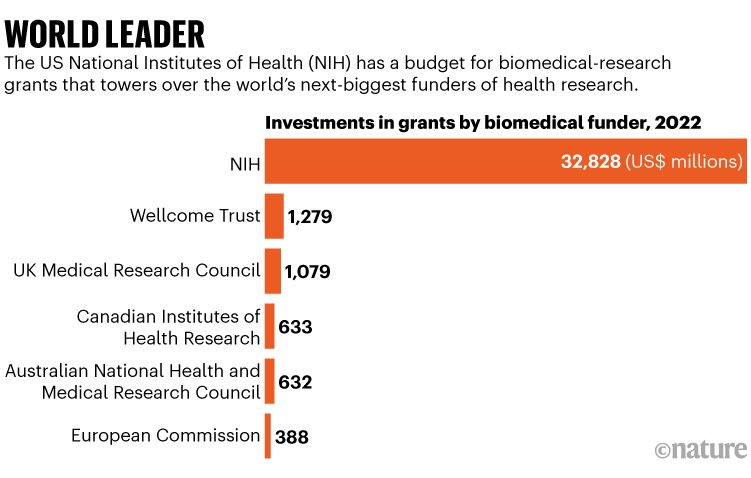
Source: World RePORT
US biomedical science dominates the world in terms of papers, discovery and drugs, says Miriam Merad, a cancer immunologist at the Icahn School of Medicine at Mount Sinai in New York City, who receives funding from the NIH and other sources (see ‘Publication prowess’). Merad points to a study1 that shows that NIH-funded research contributed to 354 of 356 drugs approved by the US Food and Drug Administration in 2010–19.
“Without NIH, there would be no cancer immunotherapy, no anti-overdose medication, no anti-heart attack or stroke medication, no cutting-edge treatments,” addiction researcher Olivier George at the University of California, San Diego, tweeted in February.
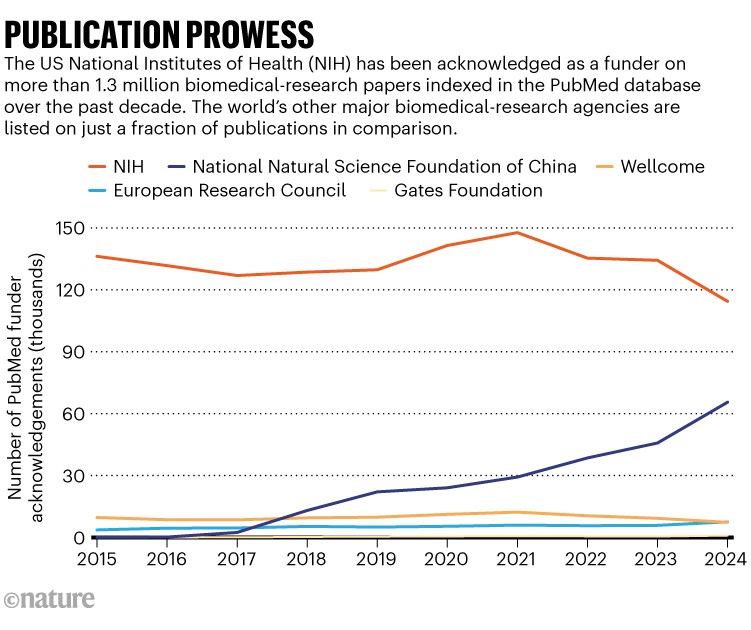
Source: PubMed
The cuts mean “drug discovery is going to slow down, for sure”, says Merad. She is working with colleagues on new drugs, the development of which they will have to pause if they don’t have certainty on funding soon. “This is the type of thing that’s happening across the country.”
The NIH’s approach to funding scientists is unique in the world, says Merad. NIH grants often allow researchers to focus on scientific problems for four or five years without the need to raise further funds, she says. That provides freedom and stability that is not typically available in other regions, such as Europe, or in industry. “They trust the brain, the mind, the intellect of the people they fund. In industry, you don’t have the luxury to pivot, you are constantly constrained.”
The NIH’s “support to basic biomedical research enables fundamental breakthroughs, the path to which would be considered too risky for any venture capitals or biopharmaceutical companies”, says Wang.
Fighting deadly disease
For decades, the NIH has also been the world’s biggest investor in research to tackle global health priorities such as HIV, tuberculosis and malaria — which together kill more than 2.5 million people a year worldwide — as well as a host of neglected diseases (see ‘Tackling global diseases’).
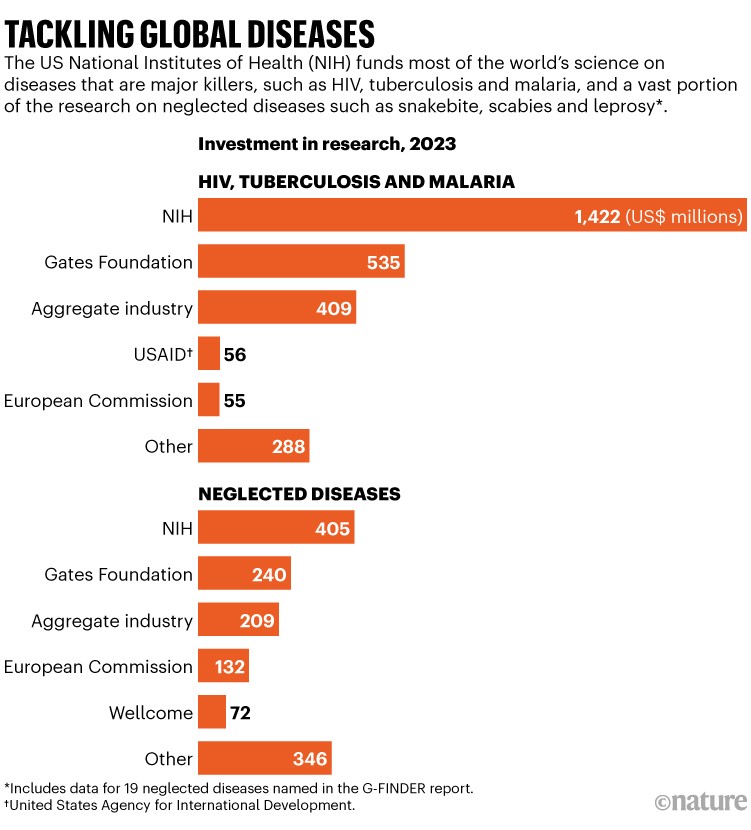
Source: G-FINDER project
Among the changes to the NIH that most concern scientists is the move to slash funds that the agency gives to grant recipients to pay for overheads, known as indirect costs. The policy will cut these costs from an average of 40% of a grant’s value to 15%, although it is facing legal challenges. The money pays for services that are essential to doing science, such as sequencing platforms, mouse and other animal facilities and clinical-trial infrastructure, says Merad. “All of these, which we call ‘indirect’, are in fact mission critical.”
Merad says that researchers would welcome a discussion on efficiency in science funding. “If you want to save money, well, discuss with us,” she says. “There’s always waste everywhere, all the time, including in the government.”
But these cuts have been indiscriminate, she says, hurting progress made by scientists who often spend years building animal models that lead to clinical trials and, eventually, drugs and cures. “Here, there was no discussion, and, to me, there is no method to cutting this way.”